When in Texas, do as the Texans do.
I traveled to Waco, Texas this past November for business and decided to put the age-old adage to the test. As a Canadian, the idea of Texas conjures up images of cowboy boots, pick-up trucks, and gun-toting republicans. And as the 2024 election loomed before my trip, red baseball caps. At the time, supporters of Donald Trump were being interviewed, mocked, and parodied, all over the news and online. But what were people in a red state like Texas really like? Was it really so different from back home in Montreal? I was ready to find out.
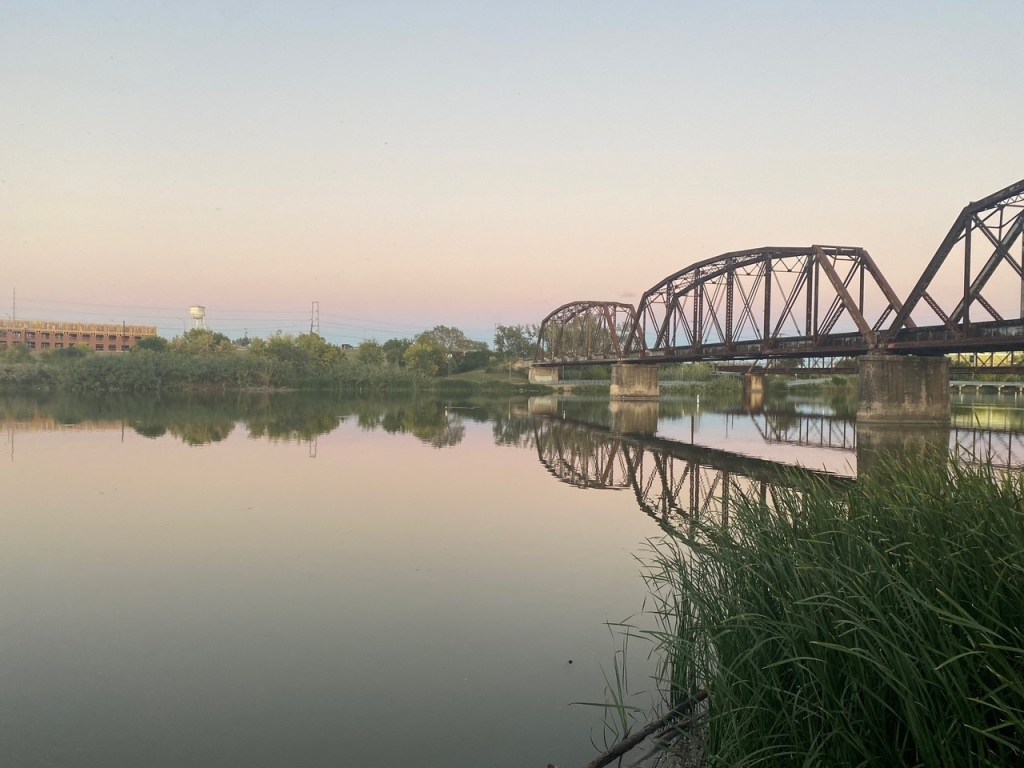
I arrived in Waco on a Saturday, and one of the first things I did was go to watch a college football game. Waco is home to Baylor University and the Baylor Bears, and as I crossed the Brazos River over the town’s historic suspension bridge, heading into town and to the Hilton Hotel, I noticed that the streets were packed with cars. Pedestrians dressed in green, ready to support their team, crowded the sidewalks. I checked into the hotel. The lobby was similarly decked out in green and gold balloons, and what I assumed was a team meeting was just finishing in one of the conference rooms. A group of large young men who must have been football players were heading out into the parking lot where coach buses were parked.
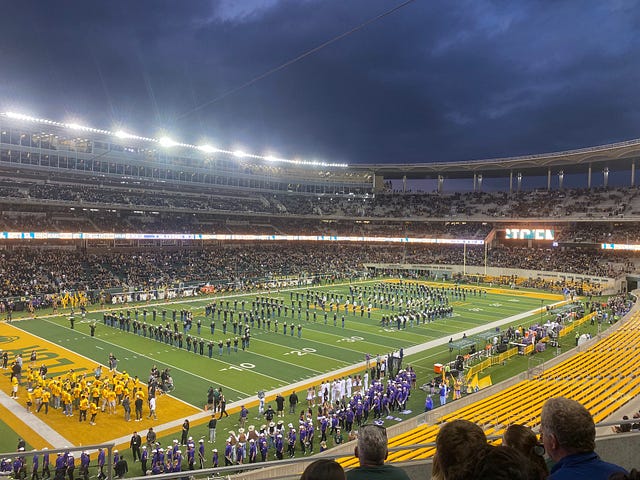
The walk to the stadium was scenic, the sun setting over the river. I climbed the stairs to my seat surrounded by excited college students. The game started with a prayer, followed by the National Anthem, complete with fireworks and overhead jets. The marching band spelled out the letters BAYLOR on the field. Cheerleaders made pyramids on the sidelines. The students sat in the lower stands and had coordinated chants and cheers at each first down and touchdown, and at the end of the game, when the Bears won, they stormed the field.
In the midst of all the fanfare, I couldn’t help but compare it to the Montreal Alouettes game I had attended with friends back home a couple weeks earlier, which seemed to pale in comparison. At this game, a group of friends was sitting in the stands behind me, evidently Baylor alumni and Waco locals taking in the game and catching up. In between cheering on their team, they discussed mutual friends and acquaintances. One told a story about a girl, I assumed a former classmate, whose boyfriend refused to take responsibility of their shared child. In between cheers, she said she knew so many women who had similar stories. The way she explained the situation casually stuck out to me as not the sort of story I was used to hearing. Maybe things were a bit different down here.
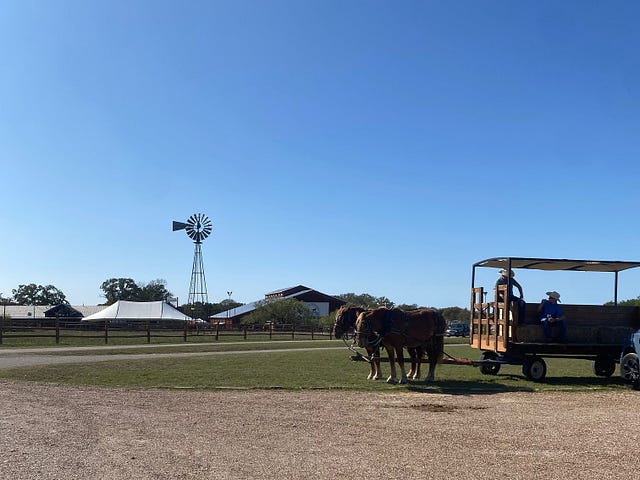
On another day, I went for lunch at a café that one of my coworkers from back home recommended. Café Homestead was situated on a large plot of land that contained a barn and multiple buildings, including a general store, a bakery, and even a watermill. I turned off the main highway and onto a dirt road, which led to a large parking area. There were people milling about, many of them heading toward the barn where a craft fair was taking place. Horse-pulled hay rides were also on offer. I walked around a little in the sun, saw a horses and men in cowboy hats against a big blue sky background, and thought I was transported in time for a moment.
The café, a popular destination for home grown food, was full so I ordered take-out. As I waited, I took a brochure from the counter and started reading it. “We are a vibrant Christian community deeply rooted in the values of simplicity, sustainability, self-sufficiency, cooperation, service, and quality craftsmanship.” It made me think about a famous cult in Waco. But this one seemed more or less harmless. The food was great, the coffee —“carefully curated and hand-crafted” — was the best I had on my trip, and the surroundings seemed idyllic. But I had seen a frowning little girl in an apron giving free jam samples at the craft fair, and boys in jeans and suspenders helping with the hay rides. Women in long dresses were waiting on the tables in the café. There was a distinctly commercial focus on expensive craft workshops, like glass blowing and quilting, that seemed to be aimed at tourists, and I wondered how much these “cooperative community members” were paid for their services.
While I was in Waco, I also visited my cousin, who lived there with his wife and two kids. They had me over, we caught up, and I was charmed by their intelligent and creative children. They were homeschooled and after we ate dinner, they proudly showed me the election-themed cookies they had made as part of a lesson about the upcoming vote. The sugar cookies were decorated in red, white, and blue frosting with little American flags. One said ‘Vote’, another said ‘TRUMP’ boldly in red, and I spotted one that said ‘Kamala’ in neat blue letters. How surprisingly non-partisan, I thought. But as some of the cookies shifted, I realized it actually said ‘Kamala sucks!’ — which made more sense.
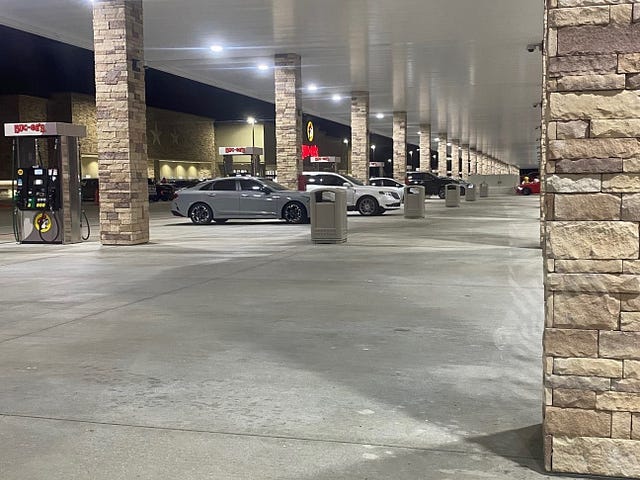
In the days leading up to November 5th, I often watched CNN in my hotel room after work, curious to see what the American news channel had to say about the election. On the night of the big day, I had to drive up to Dallas to meet with colleagues. I took the I-35 highway, heading north from Waco. One co-worker told me that the population centers in the area were concentrated along the I-35, which runs North-South from Dallas-Fort Worth all the way down to San Antonio. People and services become more sparse as one moves east or west, which I discovered for myself the next day when I visited a customer that was located a few hundred miles west of Dallas. Soon after I turned off the I-35, the surrounding scenery turned into rolling farm fields. Trucks carrying components from giant wind turbines passed me going in the opposite direction. The sky became bright orange at sunset. While large gas stations like Buc-ee’s, a Texas staple that sported rows and rows of pumps, dotted the I-35, out west they were fewer and farther between, and I almost ran out of gas heading back to Waco.
In the car on the way to Dallas on November 5th, I listened to NPR on the radio. Polls were closing, but it was still too early for anything but speculation on the results of the election. I learned Texas hadn’t voted Democrat since 1972. As I approached Dallas, I saw the city lit up in red and blue, large blue lights spelling out VOTE across one skyscraper. I decided to stop at the site where JFK was assassinated on my way to the DFW airport hotel where I would meet my colleagues. It was late, so the parking area was already closed. I parked on the street and got out to look around briefly. I saw the Texas School Book Depository building and the famous grassy knoll where conspiracy theorists believed a second shooter was standing. It was somewhat underwhelming, a street corner under a highway overpass like any other.
When I had left Waco, I noticed a Harris-Walz placard in the lawn of the Hilton. Returning the next day, I saw there were several Trump-Vance ones scattered around it. Had they been there the whole time? In the morning, I watched Kamala Harris’s concession speech. I felt disappointed that it seemed like a woman still couldn’t be president of the USA. But maybe it could still happen. The groundwork needed to be built up step by step — it wouldn’t happen all at once. I went to visit the customer for work, gave a technical presentation, saw their aircraft and even climbed up into one. A woman still can’t be president, but she can work on airplanes. In her concession speech, Kamala had asked her supporters to fight in quieter ways, by the way they live their lives.
Overall the people I worked with and encountered in Texas were hardworking, friendly, polite, and rarely brought up politics. “Do you know why people in Texas are so polite?” my cousin asked me once. “Because you never know who has a gun.” That Sunday, I went to church with my family, and afterwards they took me to the gun range. I tried a couple pistols, a revolver, and an AR-15. The shots were loud, and I was nervous at first, but after I got the hang of it, it was a little fun. One of the range masters, a young man, came up to us and asked how I was doing. I told him I had never held a gun before this. “Really?” He seemed incredulous, shaking his head as if he was thinking: Never held a gun before, who’d have thought that was possible. I said I was from Canada, and my cousin said: “They’re a bit weird up there.”
I had been noticing all week all the ways people were different here, football, politics, guns, and gas, but maybe he was right. Maybe we were the ones who were a bit weird. Texas was starting to get to me. It was time to go home.
 selective
Leave a comment